
Two signs, one lesson
I take a lot of photos of signs. It’s a bit of an occupational hazard when your job is translating technical ideas for everyday people. Every sign is a tiny communications decision someone made, and you can learn a lot from the ones that land and the ones that don’t.
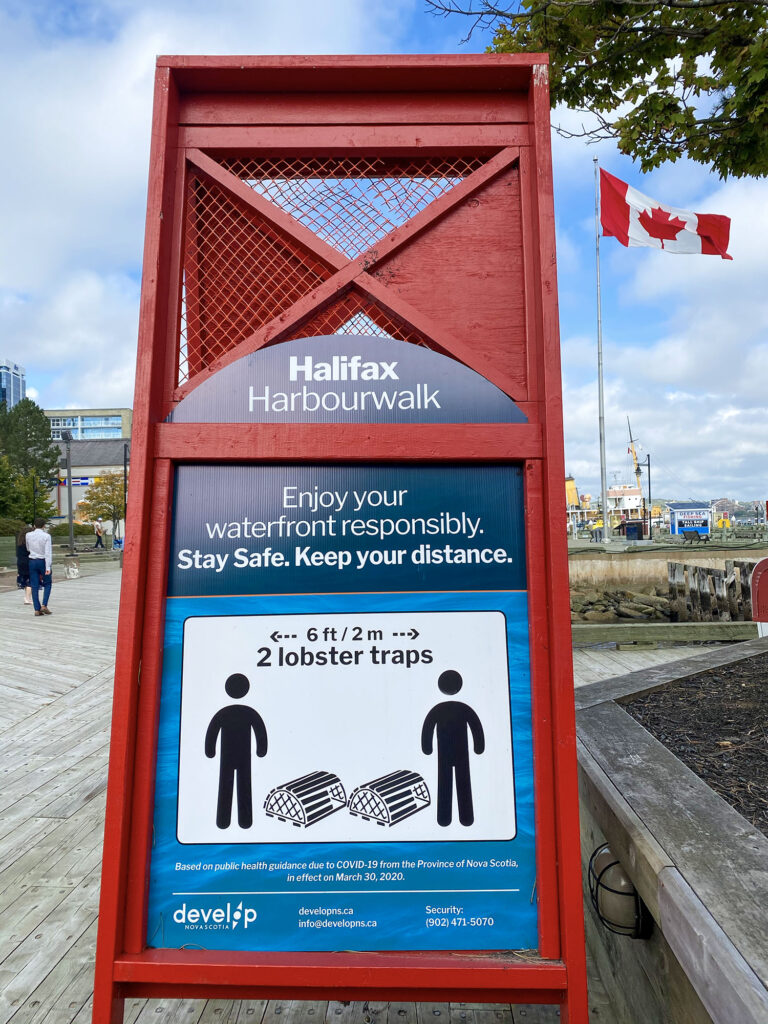
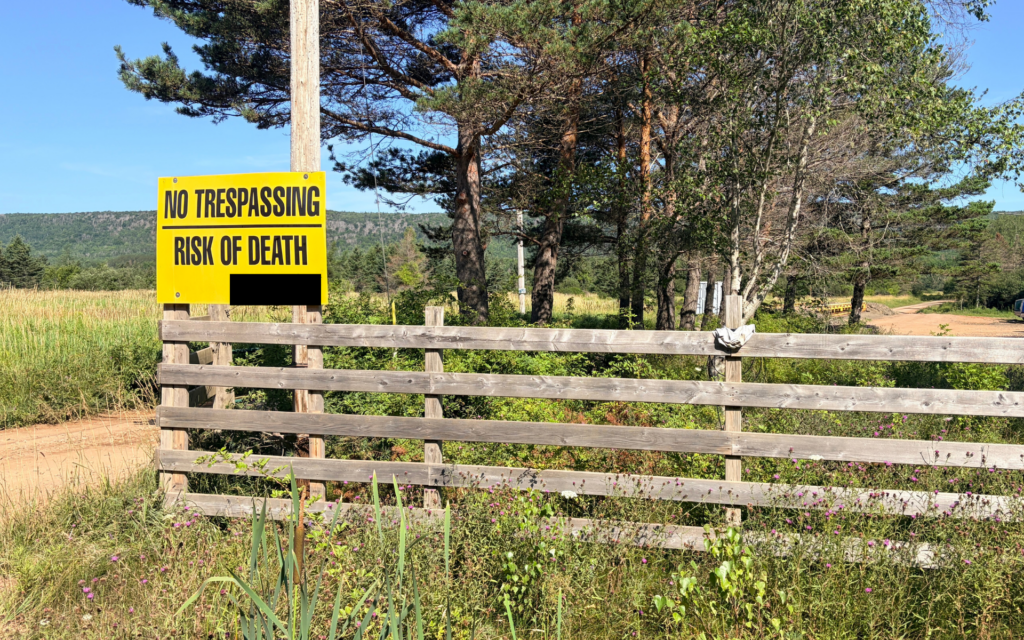
Two photos on my phone sum it up better than any workshop slide I could make. One is a sign on the Halifax Harbourwalk from the early days of the pandemic. The other is a sign I came across on a rural road near an energy site. Both were trying to keep people safe. Only one of them actually helped people understand.
The good: "2 lobster traps"
In spring 2020, all of us were told to stay six feet (or two metres) apart. Fine. But quick: how far is six feet? Most people guess, and most people guess wrong.
The Harbourwalk sign didn’t just give the number. It translated it. Two figures stand on either side of two lobster traps, with a friendly line about enjoying the waterfront responsibly.
Here’s why that works so well:
- It uses something the audience already knows. On the Halifax waterfront, almost everyone has seen a lobster trap up close. The measurement comes pre-loaded in their memory.
- It’s local. A lobster trap says “this is our place.” It feels like a neighbour talking, not a directive from far away.
- It leads with the invitation, then the rule. “Enjoy your waterfront” comes first. The ask comes second. That order matters.
- It’s a little bit fun. A small smile makes a message memorable, and memorable messages get followed.
The rule itself didn’t change. Two metres is two metres. What changed was how easy it was to picture, remember and act on.
The not-so-good: "Risk of Death"
Now picture the other sign. Bright yellow, bold black letters, nailed to a weathered fence in a peaceful green field: NO TRESPASSING. RISK OF DEATH.
To be fair, there’s likely a real safety reason behind it. Energy infrastructure can be genuinely hazardous, and the people who put that sign up were almost certainly trying to protect the public. The intent is good. The execution tells a different story.
Think about what a neighbour sees when they walk past:
- A threat with no explanation. Death from what? Is it the equipment? The ground? Something in the air or water? The sign doesn’t say, so people fill in the blank themselves, usually with the scariest option.
- No one to ask. There’s no project name, no phone number, no website. A worried person has nowhere to take their question except the coffee shop or a Facebook group.
- A wall instead of a door. “No trespassing” plus “death” reads as keep out, we have something to hide. That’s the opposite of the relationship a project needs with its community.
For a renewable energy project, that’s a real cost. These projects depend on community trust, and trust is built on understanding. A sign like this can undo months of good engagement work in about three seconds.
The lesson isn’t “never talk about risk.” It’s that how you talk about risk shapes whether people feel informed or afraid.
7 tips for explaining your project to a general audience
Whether you’re writing a sign, a community newsletter or a presentation for an open house, these principles apply.
- Find your lobster trap. Translate numbers into something people can picture. Megawatts and hectares are hard to imagine. "Enough to power every home in town" or "about the size of a dozen soccer fields" is not. Pick comparisons from your community: fishing boats, hockey rinks, the local ball field.
- Explain the why, not just the rule. "Keep out: high-voltage equipment" tells people what the danger is and why the rule exists. Understanding the reason makes people far more likely to respect it.
- Be clear about risk without being dramatic. Name the real hazard, plainly and calmly. Specific beats scary. "Moving machinery" or "buried electrical cables" informs. "Risk of death" alarms.
- Always give people a next step. Add a project name, a phone number, an email or a QR code. A question with nowhere to go turns into a rumour.
- Lead with the relationship. The Harbourwalk sign opened with "Enjoy your waterfront." Try "Thanks for respecting our site" or "Welcome to the neighbourhood" before the rules.
- Speak like a neighbour. Drop the jargon and the acronyms. If you wouldn't say it to someone over the fence, don't put it on the fence.
- Test it on someone outside the project. Show your sign, slide or fact sheet to a friend, a relative or a teenager. Ask them what it means and how it makes them feel. Their first reaction is your community's first reaction.
Every sign is a conversation
The energy transition in Atlantic Canada will be built in our communities: next to our fields, our shorelines and our backyards. The projects that succeed won’t just be the ones with the best technology. They’ll be the ones people understand.
So before your next sign goes up, or your next slide deck goes out, ask yourself one question: is this a lobster trap, or a risk of death?
If you’d like a second set of eyes on how your project is being explained, that’s exactly the kind of translation work I love. Get in touch and let’s make your message one your neighbours will actually remember.
Stay Plugged In
Enjoyed this? There’s more where that came from.
Subscribe to the newsletter – the stories, data, decoding of complicated information, and voices shaping Atlantic Canada’s energy future, straight to your inbox.
Watch the podcast – in-depth conversations with the people building this region’s clean energy economy.